

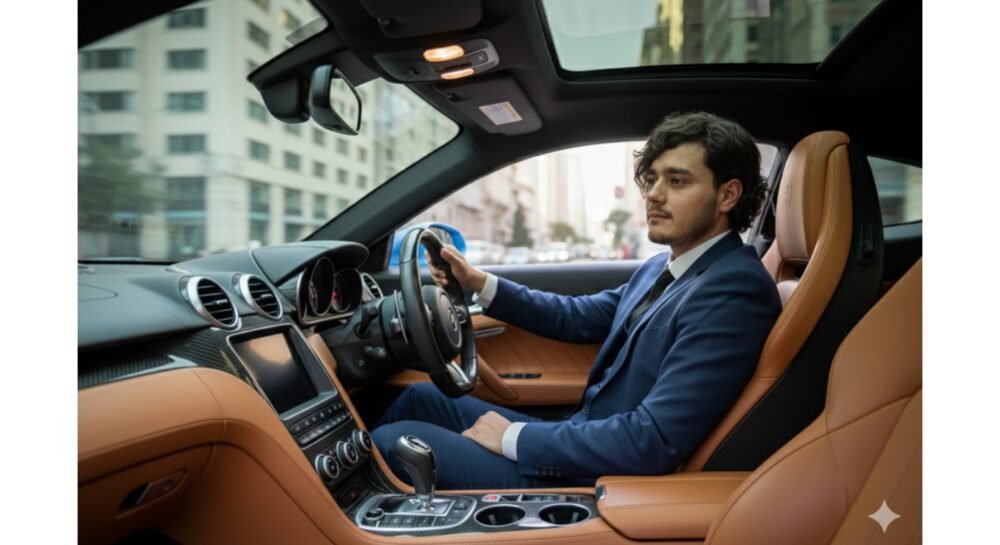
The “Car Effect” TikTok Trend: How Those AI Luxury Car Photos Are Actually Made
If your TikTok or Instagram feed has recently filled up with people apparently sitting behind the wheel of a Porsche or an Aston Martin they clearly don’t own, you’ve run into the “Car Effect” trend. It’s one of those AI photo trends that spread fast because the output looks genuinely convincing — cinematic lighting, realistic reflections on the dashboard, that shallow depth-of-field look you’d expect from an actual DSLR shoot inside a luxury car showroom.
Here’s what’s actually going on behind it, which apps are doing the heavy lifting, and a few things worth knowing before you jump in yourself.
What the Car Effect Trend Actually Is
At its core, this trend uses AI image generation tools that take a photo of your face and place it convincingly into a completely different scene, in this case, the driver’s seat of a high-end sports car. The AI isn’t just pasting your face onto a stock photo. It’s reconstructing lighting, skin texture, shadows, and perspective so the final image looks like it was genuinely shot in that environment, matching how light would actually fall on your face given the car’s interior and the angle of the shot.
This is part of a broader wave of AI photo trends that have been cycling through TikTok and Instagram over the past couple of years — the same underlying technology has powered everything from “AI yearbook photos” to “90s film aesthetic” portraits. The car version specifically leans into luxury lifestyle imagery, which is a large part of why it spread so quickly. People enjoy imagining themselves in a scenario that feels aspirational, and a photorealistic result makes it more shareable than an obviously fake edit would be.
The Apps Actually Behind This Trend
A few tools are doing most of the work when people create these images:
AI photo generator apps — a wide range of apps on both Android and iOS now offer “put yourself in a scene” style generation, where you upload a handful of clear photos of your face, and the app’s AI model uses those as a reference to generate new images of you in a specified setting. Popular options in this category include apps like Remini’s AI avatar features, Lensa, and several dedicated “AI photo” apps that specifically market scene-based generation.
CapCut — while CapCut is best known as a video editor, its AI effects library has increasingly included photo-to-scene generation tools, and it’s genuinely one of the more accessible starting points since most creators already have it installed for editing anyway.
Standalone AI art generators — tools built specifically around text-to-image or image-to-image generation, where a detailed written prompt describes the exact scene, lighting, camera angle, and style, and the AI produces a matching image using your reference photos as a base.
The really elaborate versions of this trend — the ones that look almost indistinguishable from a real photograph — usually involve fairly detailed prompts specifying camera angle, lighting direction, the exact car interior style, and explicit instructions to preserve facial accuracy without “beautifying” or altering the person’s actual features. This level of prompt detail is what separates a convincing result from an obviously AI-generated one with warped hands or an uncanny, overly smoothed face.
How People Are Actually Creating These
The general workflow looks roughly like this across most apps that support this kind of generation:
- Upload several clear reference photos of your face — most apps recommend 5-10 photos from different angles and lighting conditions, since a single photo gives the AI less to work with and often produces less accurate results.
- Choose or describe the scene — either selecting a pre-built template (many apps now have a “luxury car” or “driver’s seat” template specifically because of how popular this trend became) or writing a detailed prompt describing the car interior, camera angle, and lighting you want.
- Let the AI generate the result — this usually takes anywhere from a few seconds to a couple of minutes depending on the app and how much detail was specified.
- Review and regenerate if needed — first attempts don’t always nail facial accuracy or hand positioning (AI image generation still struggles with realistic hands more than most other elements), so creators often generate several versions and pick the cleanest one.
Why This Content Performs Well
From a content strategy angle, a few things explain why car-themed AI content spreads as effectively as it does. Automotive and luxury lifestyle content tends to draw high engagement because it taps into aspiration, and the photorealistic quality of the output makes people curious enough to comment asking how it was made, which itself drives further reach.
The trend also naturally invites variation. People try different car models, different angles, different outfits, which keeps the format fresh instead of getting stale after the first wave, extending its lifespan on the platform well beyond a typical trend cycle.
Things Worth Knowing Before You Try It
Photo quality in equals photo quality out. Blurry, poorly lit, or low-resolution reference photos will produce a noticeably less convincing result, regardless of how good the app itself is.
Data and privacy matter here. You’re uploading multiple clear photos of your face to a third-party app’s servers to generate this content. Stick to well-known, established apps with real reviews and a genuine track record rather than obscure apps that appeared out of nowhere riding the trend, since a face-data upload isn’t something to hand over carelessly to an unverified developer.
Free versions usually come with limits. Most apps offering this kind of generation gate the best quality or unlimited generations behind a subscription, with the free tier giving you a taste, often with a watermark or lower resolution output.
Results can misrepresent reality if you’re not upfront about it. Since the whole point of this trend is that the output looks like a genuine photograph, it’s worth being transparent when sharing it, especially if it’s the kind of image that could be mistaken for you actually owning or being near an expensive vehicle, since that can come across as misleading depending on the context you post it in.
A Realistic Take
This is a fun trend and a solid demonstration of how far AI photo generation has come, but it’s worth treating results with a bit of perspective. An impressively realistic photo of you in a car you’ll probably never actually drive is entertainment, not a substitute for content that showcases anything you’ve genuinely built or accomplished. If you’re using this for content creation, it works best mixed in with other, more authentic material rather than as your entire feed, since audiences do eventually notice when everything posted is generated rather than real.
