


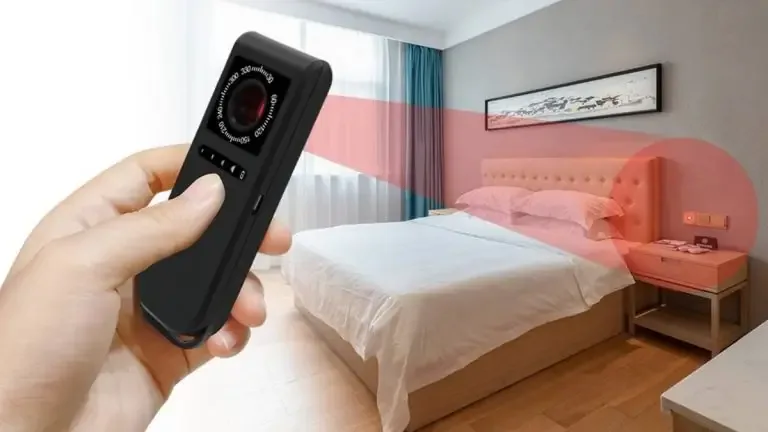
That uneasy feeling you get when you first walk into a hotel room — wondering if someone could be watching — is more justified than most people think. Hidden cameras are small, cheap, and easy to conceal inside smoke detectors, alarm clocks, USB chargers, and even mirrors. Renters, hostels, and changing rooms face the same risk. The good news: you do not need expensive spy gear to detect hidden cameras. Your smartphone, a flashlight, and ten focused minutes are enough to catch most of them.
This guide walks you through exactly where cameras hide, six practical checks you can do with your phone, and what to do in Pakistan if you find something suspicious.
Where Hidden Cameras Are Usually Placed
Cameras need two things: a clear view and a power source. That narrows the hiding spots to a handful of everyday objects. When you enter a room, these are the places worth a hard look:
- Smoke detectors and alarm clocks — the classic spots; they sit high, face the bed, and are rarely touched.
- USB chargers, power strips, and wall outlets — fake chargers with built-in lenses are sold openly online.
- Mirrors, especially in bathrooms and bedrooms — a two-way mirror can hide a camera behind the glass.
- TV frames, set-top boxes, and routers — anything facing the bed that stays plugged in.
- Bathroom vents, shower heads, and toiletries — disturbing, but a known hiding spot in cheap rentals.
- Picture frames and decorative items — anything newly placed or oddly angled deserves suspicion.
1. Kill the Lights and Scan with Your Phone Camera
Many hidden cameras use infrared (IR) LEDs for night vision, and phone cameras can see infrared light that your eyes cannot. Turn off all the lights, close the curtains, and slowly sweep the room while watching through your phone’s front camera. A tiny bright dot or purple-white glow — especially on smoke detectors, clocks, or chargers — is a strong red flag. Rear cameras on newer phones sometimes have IR filters, so try the front (selfie) camera if the rear one shows nothing.
2. The Flashlight Lens-Glare Test
Camera lenses reflect light in a distinctive way. In a dark room, shine your phone’s flashlight slowly across suspicious objects. A real camera lens throws back a small, sharp, bluish glint that stands out from the flat reflections of plastic and glass. Check the same spots from two or three angles — a lens glint usually only shows from one direction.
3. Scan the Room’s Wi-Fi Network
Most modern spy cameras transmit over Wi-Fi. Connect to the room’s Wi-Fi and use a network scanner app (like Fing) to list every connected device. Look for entries with unfamiliar names, camera brands, or generic labels like “IP Camera” or unknown MAC addresses. If a device shows up that the hotel cannot explain, treat it as suspicious.
4. Do a Slow, Hands-On Physical Sweep
No app replaces your eyes and hands. Walk the room slowly and check the items from the hiding-spot list: look for tiny pinholes in plastic casings, lenses behind dark glass, wires that lead nowhere, and objects that feel heavier than they should. Unscrew nothing — just observe. Anything recently added, oddly angled toward the bed, or blinking in the dark earns a closer look.
5. The Two-Way Mirror Check
Press your fingertip flat against the mirror. On a normal mirror, there is a visible gap between your finger and its reflection because of the glass thickness. On a two-way mirror, your finger and the reflection appear to touch with no gap — that means someone could be watching from behind it. Pay special attention to mirrors in bedrooms and bathrooms of unfamiliar rentals.
6. Detector Apps: Useful, But Not Magic
Hidden-camera detector apps that claim to find cameras via magnetic sensors or “AI scanning” get mixed results in real testing. They can help — some genuinely flag strong magnetic fields near electronics — but they also produce false alarms and miss real cameras. Use them as a supplement to the checks above, never as your only method. And keep your phone itself healthy and updated, since an outdated, malware-ridden phone is a privacy risk of its own — learn the basics of Android system repair so crashes and spyware do not expose your data while you travel.
What to Do If You Actually Find a Hidden Camera
Finding one is alarming, but handle it calmly:
- Do not touch or remove it. It is evidence. Moving it can destroy fingerprints or break the chain of proof.
- Document everything. Photograph the device, its location, and the room number. Note the date and time.
- Leave the room and inform the management — in writing if possible (a message or email creates a record).
- Report it to the police. Secretly recording someone without consent violates privacy laws in Pakistan. You can also report digital-privacy crimes to the FIA Cybercrime Wing (helpline 1991).
- Do not confront staff alone if you feel unsafe. Bring someone with you or wait for the authorities.
Simple Habits That Keep You Safer
Make the room sweep part of your check-in routine — it takes ten minutes and becomes second nature. When traveling, avoid connecting to unknown open Wi-Fi without protection, keep your Google activity and watch history cleared so a compromised device reveals less about you, and review app permissions on your phone before every trip. For families, teach older children the mirror check and the flashlight test — it takes two minutes and they remember it.
Hidden cameras thrive on the assumption that nobody checks. Now you check.
Can my phone really detect hidden cameras?
Partly. Your phone’s camera can reveal infrared LEDs in a dark room, and network scanner apps can list unknown devices on the room’s Wi-Fi. But phones miss non-infrared, non-Wi-Fi cameras — so combine phone checks with the flashlight and physical sweep.
Are hidden camera detector apps worth installing?
As a supplement, yes; as your only method, no. They can flag strong magnetic fields near electronics but produce false alarms and miss real cameras. Use them alongside the manual checks in this guide.
Is it illegal to secretly record someone in a hotel room in Pakistan?
Yes. Recording someone without consent in a private space violates privacy protections. If you find a camera, document it and report it to the police or the FIA Cybercrime Wing (helpline 1991).
What should I check first when I enter a hotel room?
The smoke detector, alarm clock, mirrors, and anything facing the bed — those cover the most common hiding spots. A quick dark-room phone-camera sweep takes two minutes.
Should I buy an RF detector device?
Frequent travelers and business travelers may find a pocket RF detector useful, but for occasional trips the phone-based checks in this guide catch most common cameras. No gadget replaces a careful physical sweep.

1 Comment
Pingback: Anti Spy Detector App: Honest 2026 Review (What It Won't Do)